
Wolf
Heard far more often than seen. A pack travels the whole valley system, and most guests only find the tracks on the sand bar in the morning.
Canis lupus
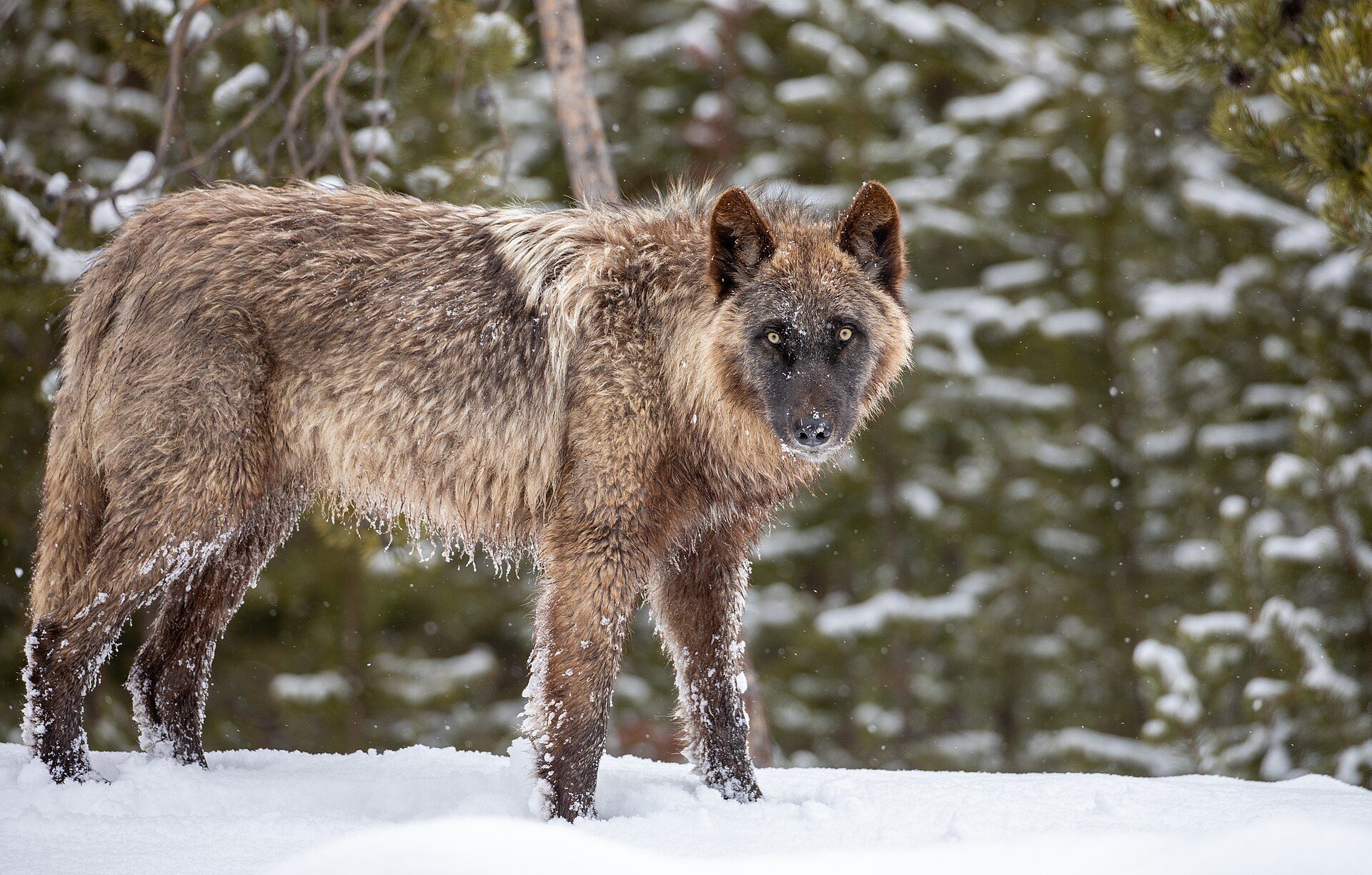
A family that hunts together.
- Weight
- Around 35 to 60 kg, males heavier
- Colour
- Grey, black and almost white, often in the same pack
- Pack
- A breeding pair and their young, often five to ten animals
- Range
- A pack covers hundreds of square kilometres
- Food
- Moose above all, also beaver, goat kids and whatever is weak
- Voice
- Howling keeps the pack together and marks its ground
Where it lives
Wolves live wherever their prey lives. They travel the easy lines: river bars, lake shores, game trails and frozen water in winter. A pack may pass a camp one night and be forty kilometres away the next.
Their sign is everywhere once you know it: big tracks in a straight line, scat full of hair, a moose that does not stand around.
A year on the move.
Spring
Pups are born in a den in April and May. The pack hunts close to home.
Summer
Pups move to meeting places and learn the country. Adults hunt beaver and calves.
Fall
The young travel with the pack. Howling carries far on cold evenings.
Winter
The pack hunts moose in the snow and covers long distances. Breeding in late winter.
How we treat the wolf.
The wolf belongs here and keeps the moose and goats sharp. A wolf can be taken on a hunt when the chance comes and the licence is in your pocket, but it is never promised and never the easy part.
Hearing a pack howl across the lake at night is something most guests remember longer than anything they carried home.