
Black bear
The bear you will most likely meet up here. Curious, quiet on its feet and far more at home in this country than we are.
Ursus americanus
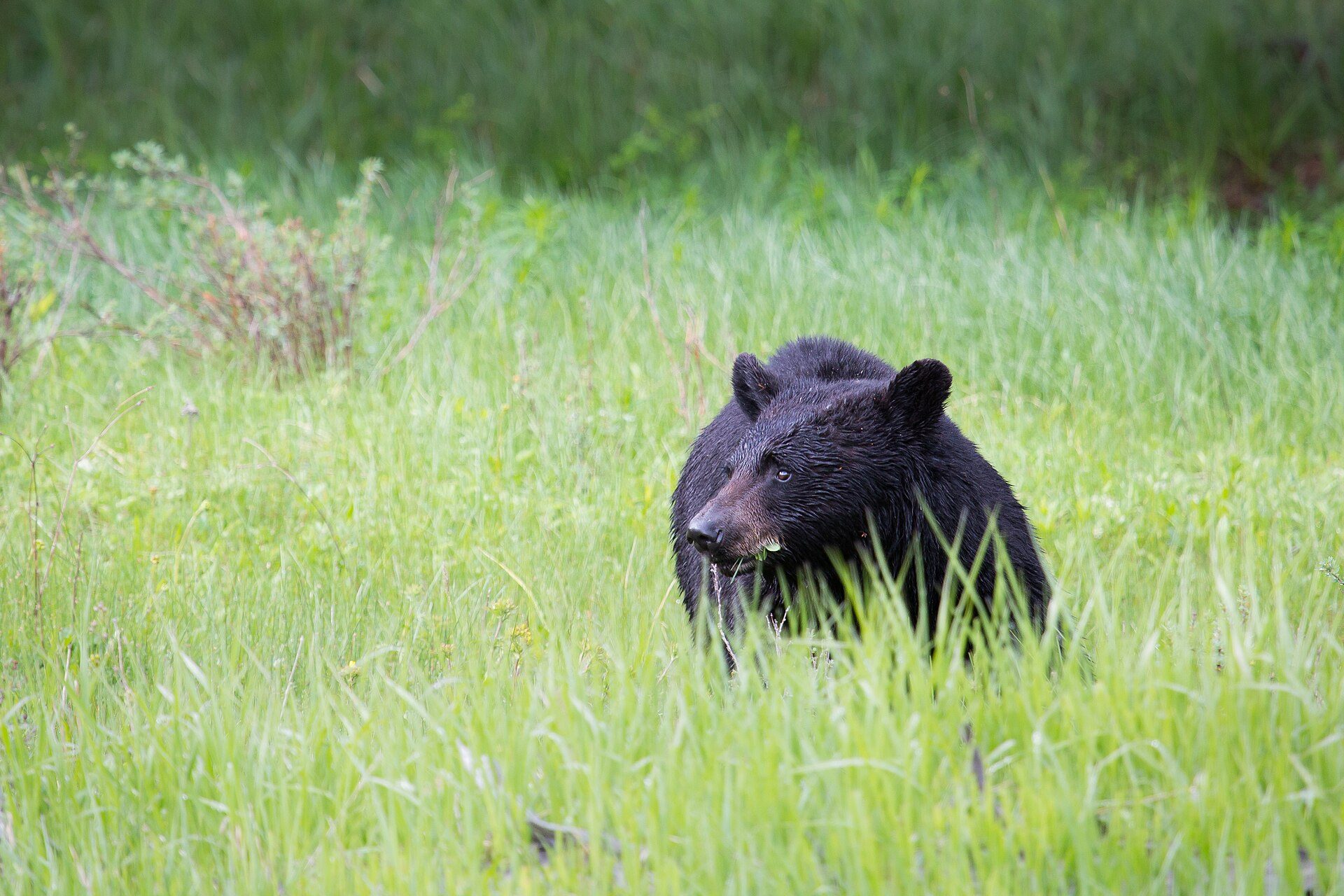
An eater of almost everything.
- Weight
- Mature boars often 100 to 200 kg and more, sows smaller
- Colour
- Black to brown and cinnamon, often with a pale muzzle
- Shape
- No shoulder hump, straight face, tall ears
- Claws
- Short and curved. Black bears climb well all their lives
- Food
- Mostly plants: grass, shoots and berries, plus fish and carrion
- Age
- Twenty years and more in the wild
Where it lives
Black bears use the whole territory below the rock: timber, avalanche slides, lake shores and river bars. In spring they follow the green-up, first on the sunny shorelines and slides, later up the slopes as the snow goes.
In late summer the berries pull them onto open hillsides, and where fish run they are on the water.
Half the year awake.
Spring
Out of the den in April and May, hungry, feeding on the first green.
Summer
Breeding season in June and July. Then berries, as many as a bear can find.
Fall
Feeding almost around the clock to lay on fat before the snow.
Winter
In the den from about November. Cubs are born there in mid winter.
How we hunt and watch them.
We hunt black bear in spring by spot and stalk, glassing shorelines and slides and taking our time to judge the animal. We look for old boars and leave sows with cubs alone, always.
In camp we keep a clean kitchen and store food so that no bear learns to connect people with a meal. A bear that stays wild stays alive.