
Canada moose
The biggest deer on earth, and the animal of the valley floor. Where the goat owns the cliff, the moose owns the willows, the burns and the lake shore.
Alces alces andersoni
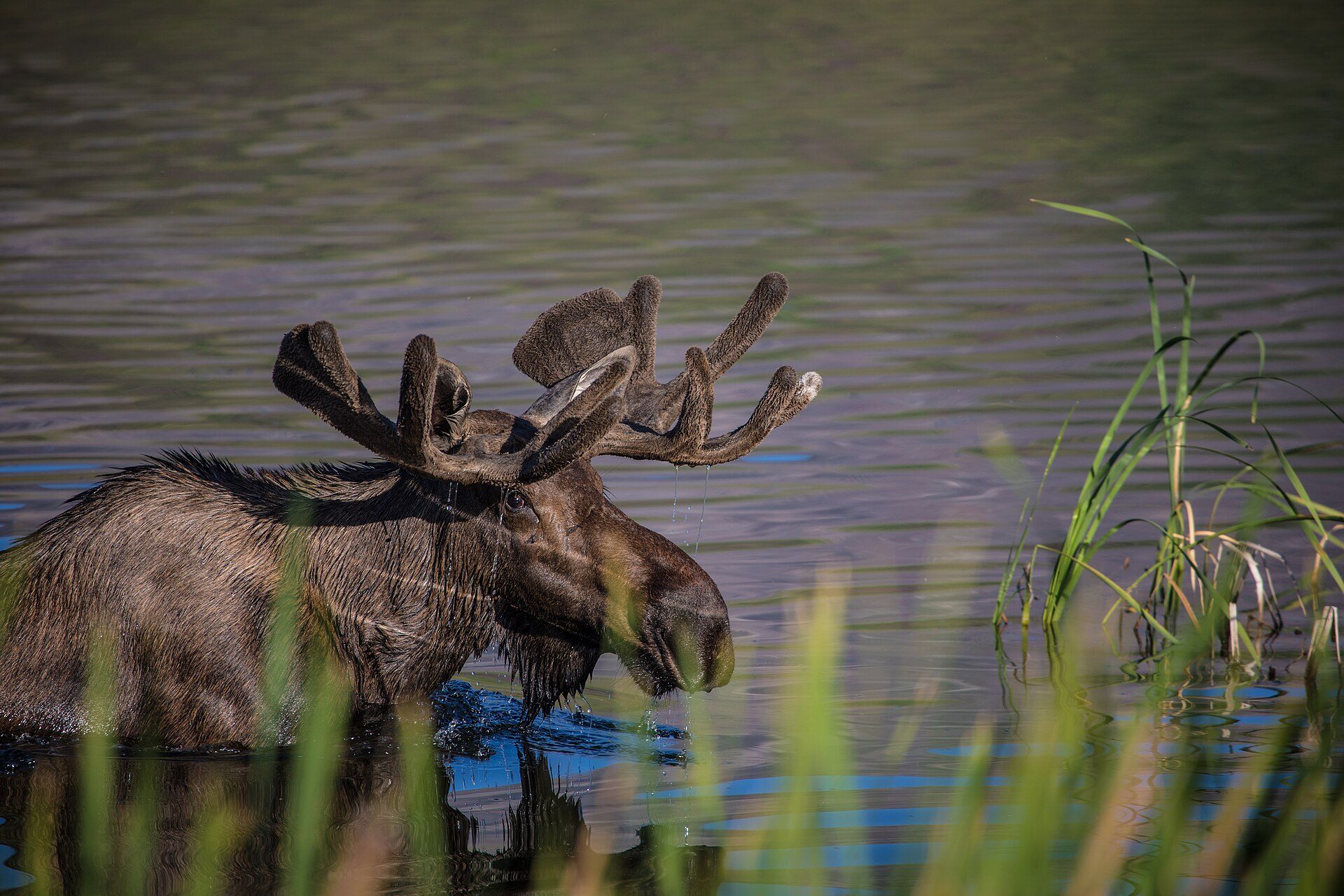
Built for the swamp and the snow.
- Weight
- Mature bulls around 450 to 600 kg, cows clearly lighter
- Height
- Up to two metres at the shoulder
- Antlers
- Palmate, grown new every summer and dropped in winter
- Legs
- Long enough for deep snow and for wading out to water plants
- Senses
- Fine nose and ears, weak eyes. The wind decides everything
- Food
- Willow, birch and aspen browse, water plants in summer
Where it lives
Moose keep to the low country: willow flats along the rivers, beaver ponds, old burns and the shallow bays of the lakes. In the heat of summer they stand in the water to feed and to get away from the flies.
When the snow comes they move into heavier timber, where it lies less deep and the browse stays within reach.
A year in the valley.
Spring
Cows calve in late May and June, alone and well hidden. Bulls start growing antlers in velvet.
Summer
Feeding on water plants and fresh browse. Antlers grow fast and are clean by early September.
Fall
The rut runs from late September into October. Bulls travel, answer a call and forget to be careful.
Winter
Antlers drop. Moose save energy in the timber and live on twigs until the green returns.
How we hunt and watch them.
A bull moose is a lot of animal and a lot of meat. We hunt mature bulls in the rut, by calling and by glassing from the water, and we take few each season within what the province allows.
The work starts after the shot. Nothing is wasted. Guests without a rifle meet the same moose from the boat or the cabin porch, usually at first light.